Analog vs Digital Mixing: What the Pros Actually Think in 2026
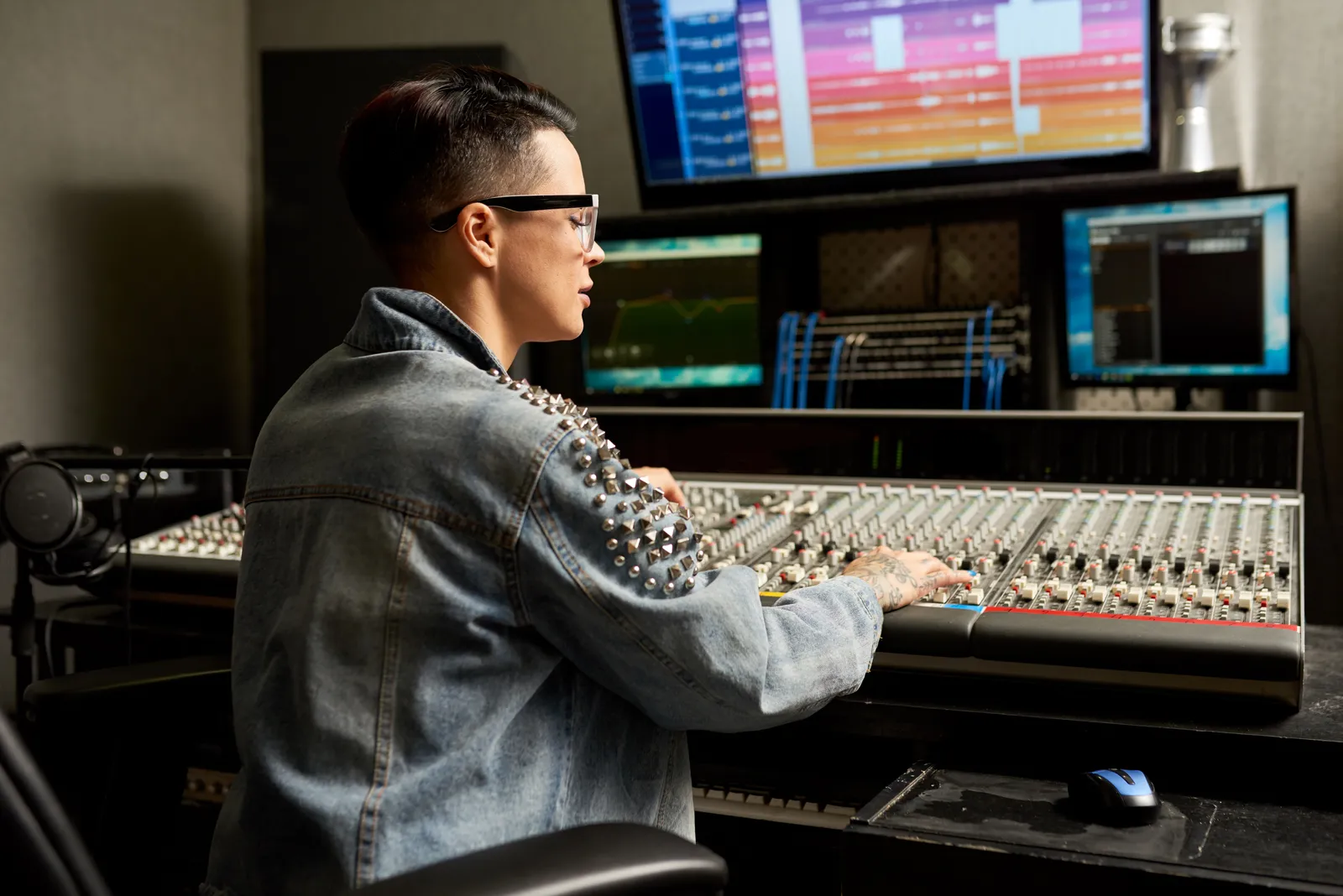
The analog vs digital mixing debate has been running for over two decades, and it's still one of the fastest ways to start an argument in any studio. The truth is messier than either side admits — and in 2026, the lines between the two approaches are blurrier than ever.
This guide breaks down what actually matters: sound, workflow, cost, and practicality. No ideology, just facts.
TL;DR
- Pure analog mixing delivers harmonic character and tactile workflow, but it's expensive, non-recallable, and space-hungry.
- Digital mixing (in the box) offers total recall, near-zero marginal cost per plugin, and fits in a laptop bag.
- Most professional studios in 2026 run a hybrid mixing setup — analog summing or outboard processing combined with DAW-based mixing.
- The real question isn't analog or digital. It's how much of each you need for your music and budget.
How We Got Here: Console Era to DAW Era to Hybrid
The Console Era (1960s–1990s)
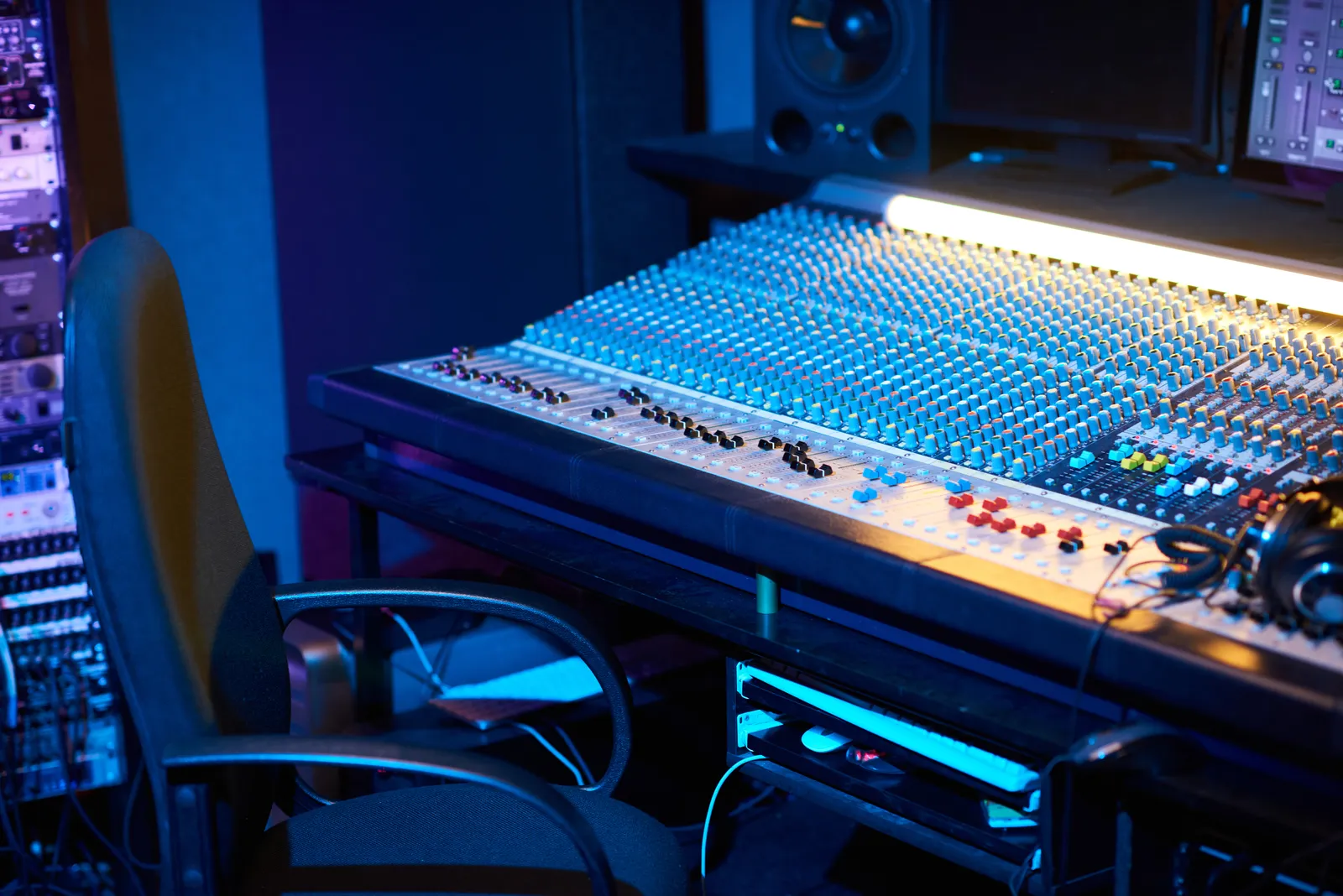
For roughly three decades, mixing meant a large-format analog console. Studios built rooms around SSL 4000 series desks, Neve 8068s, and API 2488 consoles. Engineers developed workflows tied to specific desks — the SSL 4000 became synonymous with punchy pop and rock, while Neve consoles defined the warm, musical top end that artists still reference today.
The economics were brutal. An SSL 4000 E cost north of $200,000 in the 1980s. Maintenance required a full-time tech. Only well-funded commercial studios could afford this workflow.
The DAW Revolution (Late 1990s–2010s)
Pro Tools, Cubase, and Logic brought the entire mixing process inside a computer. A bedroom producer could suddenly access unlimited tracks, instant recall, and plugin emulations of hardware that used to cost six figures. The mixing in the box vs console debate ignited almost immediately.
Early ITB mixes had real sonic shortcomings — harsh summing and unconvincing plugin emulations. But DAW technology improved fast. By the mid-2010s, top mixers like Andrew Scheps had moved entirely in the box, proving that world-class results didn't require a console.
The Hybrid Era (2015–Present)
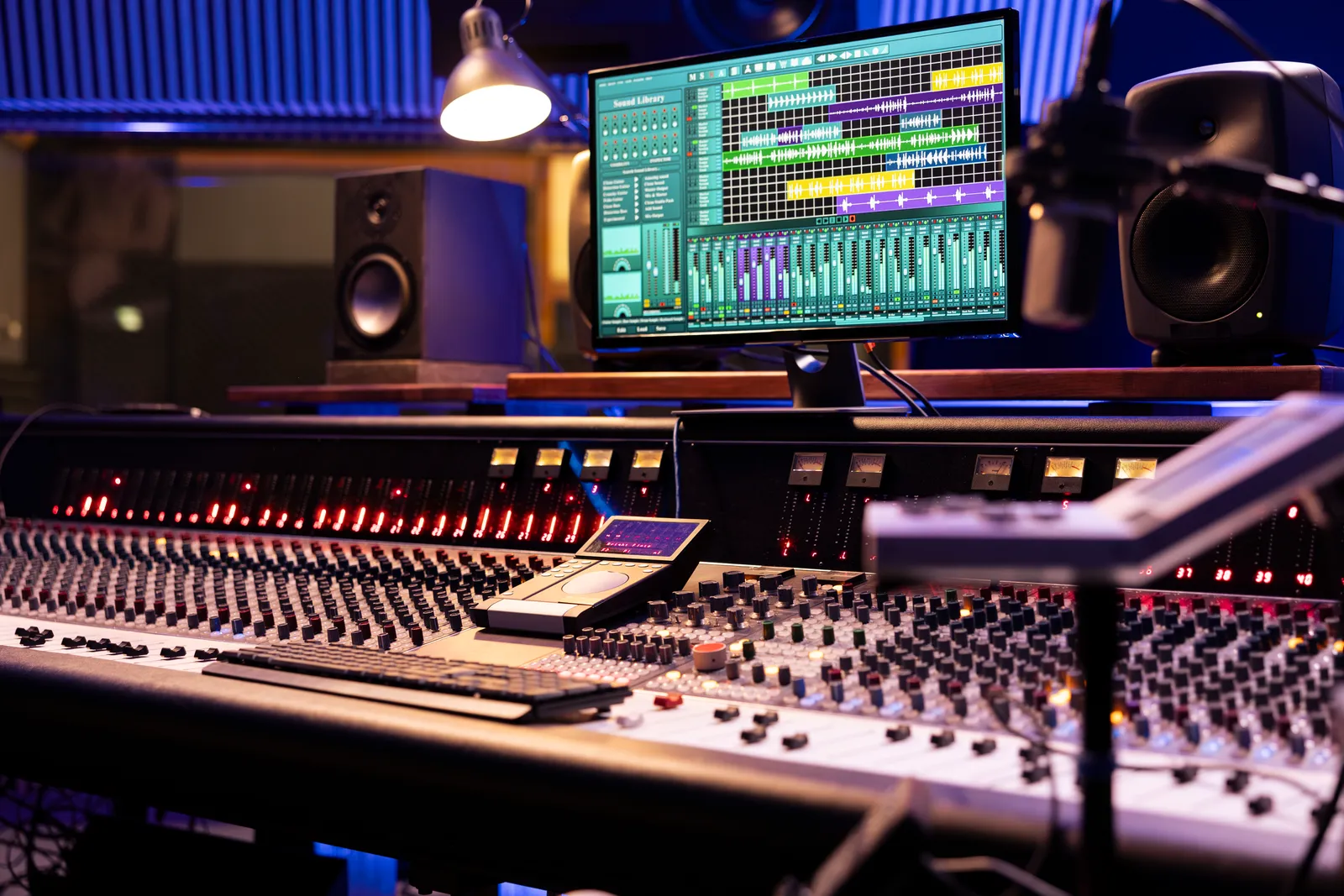
The pendulum settled in the middle. Many engineers kept a few pieces of analog outboard — a stereo bus compressor, a summing mixer, a pair of preamps — while doing 90% of the work inside a DAW. This hybrid mixing setup offered the best of both worlds: digital recall and flexibility with analog character on the elements that mattered most.
By 2026, the digital mixing console vs analog debate isn't really about sound quality anymore. It's about workflow, feel, and economics.
Analog Mixing: Pros and Cons
What Analog Gets Right
Tactile workflow. Moving real faders across a console surface engages your hands and ears simultaneously. Engineers who grew up on SSL or Neve desks describe a spatial awareness from fixed channel positions and physical knob turns. When you reach for channel 14's EQ, your hand knows exactly where it lives.
Harmonic saturation. Analog circuits add subtle harmonic distortion — odd harmonics from transformer-coupled designs (Neve), even harmonics from Class A topologies (API). It's a measurable coloration that decades of hit records have trained listeners to associate with "professional" sound. Sound On Sound has published extensive technical analyses of analog console coloration documenting these differences.
Summing character. Running 24+ channels through an analog summing bus introduces crosstalk and phase interactions that many engineers describe as "glue." Whether this is objectively better is debatable, but it's a real sonic difference.
What Analog Gets Wrong
No recall. Walk away from an analog mix and come back tomorrow, and you're starting from scratch unless you photographed every knob position. Session recalls on an SSL 4000 could take an experienced assistant 45 minutes or more.
Cost of entry. A functional large-format console starts around $15,000 used for vintage Soundcraft or Allen & Heath models. Anything from SSL, Neve, or API commands $50,000 to $500,000+. Maintenance adds thousands per year.
Physical footprint. A 48-channel console can be 6 feet wide and 3 feet deep. It needs a purpose-built room with proper ventilation and power conditioning.
Channel count limitations. You get exactly as many channels as the console has. Need more? Buy a bigger desk or submix before hitting the console.
Digital Mixing (In the Box): Pros and Cons
What Digital Gets Right
Total recall. Save your session, close the laptop, open it six months later, and every fader, plugin parameter, and automation curve is exactly where you left it. This alone changed the economics of mixing — you don't need to finish a mix in one sitting.
Plugin economics. A single Waves SSL Channel strip license costs a fraction of one channel of real SSL hardware. Emulations from Plugin Alliance, Universal Audio, and Brainworx have reached a level where many professionals can't reliably distinguish them from hardware in blind tests.
Unlimited processing. Insert 15 plugins on one channel. Automate every parameter. Run parallel compression chains. None of this costs anything beyond CPU power.
Portability. A full mixing rig fits in a backpack. Producers mix on flights, in hotel rooms, and in home studios that double as bedrooms.
What Digital Gets Wrong
Mouse-driven workflow. This is the single biggest complaint from engineers who've worked on consoles. Clicking one fader at a time with a mouse is slow and disconnects your ears from the process. You end up watching meters instead of listening.
Decision fatigue. Unlimited options mean unlimited second-guessing. Analog forces commitment — you print your mix through the desk and move on. ITB mixing enables infinite tweaking, and many engineers report that their mixes get worse after the first few hours.
Summing differences. DAW summing is mathematically perfect. But "perfect" can sound sterile compared to the slight imperfections of analog summing. Whether you prefer mathematical precision or analog interaction is a taste decision, not a quality one.
Analog vs Digital Mixing: Side-by-Side Comparison
| Factor | Analog Console | DAW (In the Box) | Hybrid Setup | Touch Controller + DAW |
|---|---|---|---|---|
| Sound Character | Harmonic coloration, analog summing | Clean, mathematically precise | Analog on key buses, digital elsewhere | Same as ITB (processing stays in DAW) |
| Recall | Manual (no recall) | Instant, total | Partial | Instant, total |
| Cost | $15,000–$500,000+ | $0–$2,000 (plugins) | $3,000–$30,000 | $50–$5,000 |
| Tactile Feel | Full physical control | Mouse/keyboard only | Physical on outboard, mouse on DAW | Touch faders and knobs on screen |
| Channel Count | Fixed by hardware | Unlimited | Limited by analog I/O | Unlimited |
| Maintenance | Ongoing (caps, faders, cleaning) | None (software updates) | Mixed | Minimal (no moving parts) |
| Footprint | Large (dedicated room) | Laptop-sized | Medium (rack + desk) | Desk surface or monitor |
| Learning Curve | Steep | Moderate | Steep (both worlds) | Moderate |
The Hybrid Approach: Best of Both Worlds
The hybrid mixing setup has become the default for working studios that want analog character without the full console commitment. A typical 2026 hybrid rig includes:
- DAW handling all editing, arrangement, automation, and plugin processing
- Analog summing mixer (Dangerous Music 2-Bus+, Heritage Audio MCM-32, or similar) receiving stem groups from a DA converter
- One or two outboard pieces on the mix bus — a stereo compressor (SSL G-Bus, Neve 33609) and sometimes an analog EQ
This approach solves the recall problem for 95% of the session. Only the outboard settings need manual documentation. Because you're sending stems (not individual channels) to the analog chain, you need far less converter I/O than a full analog mix would require.
The cost is manageable. A summing mixer runs $1,500–$4,000, a stereo bus compressor $1,000–$5,000, and a 16-channel DA converter $1,500–$3,000. Total hybrid investment sits between $4,000 and $12,000 — a fraction of a large-format console.
Do You Need a Console to Mix?
The honest answer: no. Do you need a console to mix in 2026? You don't. The top-charting records of the past five years include plenty of fully ITB mixes. Andrew Scheps, Tchad Blake, and other A-list mixers have proven that console-less mixing produces competitive results.
What a console gives you isn't a quality advantage — it's a workflow advantage. Hands-on faders and fixed channel positions make you a faster, more decisive mixer. The question is whether that improvement justifies the cost.
Where TouchDaw Fits: Bridging the Gap
Here's where the analog vs digital mixing debate gets interesting for producers who love the ITB economics but miss the tactile feel of a console.
TouchDaw is an ultra-wide touchscreen surface (38" x 10") that lays flat on your desk, placing your DAW's entire mixer under your fingertips in a horizontal console-style layout. It doesn't add analog coloration — your signal chain stays entirely digital. What it adds is the physical interaction that mouse-driven mixing lacks: simultaneous multi-fader moves, spatial channel awareness, and the hand-on-surface workflow that console engineers describe as essential to their process. At $50–$190, it costs less than a single channel of most hardware controllers, and it works with any DAW on Mac or Windows via USB-C. For producers caught between the analog feel they want and the digital convenience they need, it's a practical middle path that didn't exist a few years ago.
Pro Tip: Whether you're mixing on a console, in the box, or hybrid, gain staging is the single biggest factor in your final sound. Keep channel faders around unity (0 dB) and manage levels with clip gain or input trim before the fader. This preserves headroom through your plugin chain and gives faders their full resolution range — the same principle console engineers learned decades ago when clipping a channel meant audible distortion, not just a red light.
Frequently Asked Questions
Is analog mixing better than digital?
Neither is objectively better. Analog adds harmonic coloration and a tactile workflow many engineers prefer. Digital provides total recall, lower cost, and unlimited processing. The "better" approach depends on your music, budget, and how you work. Most commercial studios in 2026 use some combination of both.
What is mixing in the box?
Mixing in the box (ITB) means doing all your mixing inside a DAW using software plugins — no external analog hardware in the signal chain. Your audio stays digital from raw tracks through the final bounce. It's the most common approach for home studios and increasingly common in professional facilities.
Can plugins really replace analog gear?
For most practical purposes, yes. Modern emulations from Universal Audio, Plugin Alliance, and Brainworx are close enough that trained engineers often can't distinguish them from hardware in blind tests. Where analog still has an edge is in the tactile experience and the subtle interaction between multiple circuits running simultaneously.
What is a hybrid mixing setup?
A hybrid setup combines DAW-based mixing with select pieces of analog hardware — typically a summing mixer and one or two outboard processors on the mix bus. The DAW handles editing and automation while analog hardware adds tonal character to the final stereo bus. Digital recall with analog flavor.
Do professional mixers still use consoles?
Some do, but fewer than a decade ago. Studios like East West still maintain large-format consoles, and certain mixers prefer the console workflow for specific genres. But a significant number of top-tier mixers have transitioned to ITB or hybrid rigs. The DAW control surfaces and touch controllers now available have closed much of the workflow gap.
How much does it cost to start mixing with analog gear?
Entry-level analog mixing starts around $3,000–$5,000 for a basic hybrid rig: a summing mixer, bus compressor, and DA converter. A full large-format console starts at $15,000 used and climbs past $100,000 for SSL or Neve. By contrast, a full ITB setup with MIDI fader controllers and quality plugins can be assembled for under $1,000.
The Bottom Line
The analog mixing vs digital argument has a simple resolution in 2026: use what serves the music and your workflow. Pure analog is a luxury with real sonic and creative benefits. Pure digital is practical, affordable, and produces records that compete at every level. Hybrid and touch-based approaches sit in between, offering varying degrees of tactile control and analog character.
The gear matters less than how well you know it. Pick an approach, learn it deeply, and spend your energy on the mix — not the mixing console vs audio interface debate that's been going in circles since the late '90s.