Neve Mixing Consoles: History, Sound & Modern Alternatives
A neve mixing console has a way of making engineers stop mid-session. The sound that comes back through the monitors when you push signal through one of these desks - warm, present, and somehow both controlled and alive - is hard to describe to someone who hasn't experienced it. It's the reason Neve consoles have never really left professional recording, even in a world where most mixing now happens in software. The neve console sound became the blueprint for how recorded music should feel, and understanding it makes you a more informed engineer regardless of your budget.
TL;DR
- Neve consoles use transformer-coupled Class A circuitry that adds harmonic warmth to audio - what engineers call analog console warmth
- The Neve 8078 and related large-format desks were the console of choice for many landmark recordings of the 1970s
- The Neve 1073 preamp/EQ module is the most widely emulated circuit in audio history
- Modern producers access the Neve sound through outboard hardware, high-quality plugin emulations, and tactile DAW control surfaces
- Understanding what makes Neve different helps you make smarter decisions about your own recording and mixing chain
What Makes a Neve Mixing Console Different
Most professional audio consoles use transistor-based circuits to amplify and route audio. What sets a neve mixing console apart is the combination of transformer-coupled signal paths and Class A amplification stages, an approach that Rupert Neve refined across his designs starting in the 1960s.
Transformers in the signal path do something that purely electronic circuits don't: they introduce controlled harmonic distortion - specifically even-order harmonics - which the human ear tends to perceive as warmth or presence rather than unwanted noise. When you route a vocal or a drum overhead through a Neve preamp, you're not getting a perfectly transparent reproduction of what the microphone captured. You're getting a version that's been gently shaped by the transformer's magnetic characteristics. For most recorded music, that shaping sounds better.
Class A operation means the amplifier's output transistors are always conducting, even when no signal is present. That's electrically inefficient - it's why Neve consoles run warm and draw significant power - but it produces a different character of harmonic distortion than the push-pull Class AB designs used in most other professional consoles. The result is smooth, even saturation rather than the crossover distortion that can occur with other topologies.
The analog console warmth that Neve is known for comes from these two factors working together. It's not neutral; it's musical. Engineers who've worked on both Neve and other high-end consoles consistently describe Neve as "forgiving" - it tends to make things sound good even when the source material isn't perfect. You can read Sound On Sound's in-depth coverage of Neve's console history and circuit philosophy at soundonsound.com to understand how these design choices shaped the profession over several decades.
The Neve 8078: The Console That Defined an Era
The Neve 8078 was the company's flagship large-format console during the 1970s, configurable with up to 80 channels of audio, each built around Neve's proprietary modules. It became the desk of choice for many of the decade's most significant recording sessions.
Its influence shows up in the records themselves. The combination of Neve preamps, large-format console workflow, and the purpose-built studios that housed these desks contributed to the quality that music fans identify as the "1970s sound" - present midranges, punchy transients, and a dimensional quality that a lot of modern digital recordings work hard to replicate.
The 8078 used a modular design that let studios configure the desk to their specific needs. Standard modules handled mic preamps, equalization, and dynamics, while the desk's summing bus contributed its own character to the final blend. This modular construction also meant individual sections could be repaired or replaced without taking the whole desk offline - a practical advantage in commercial studios where downtime cost real money.
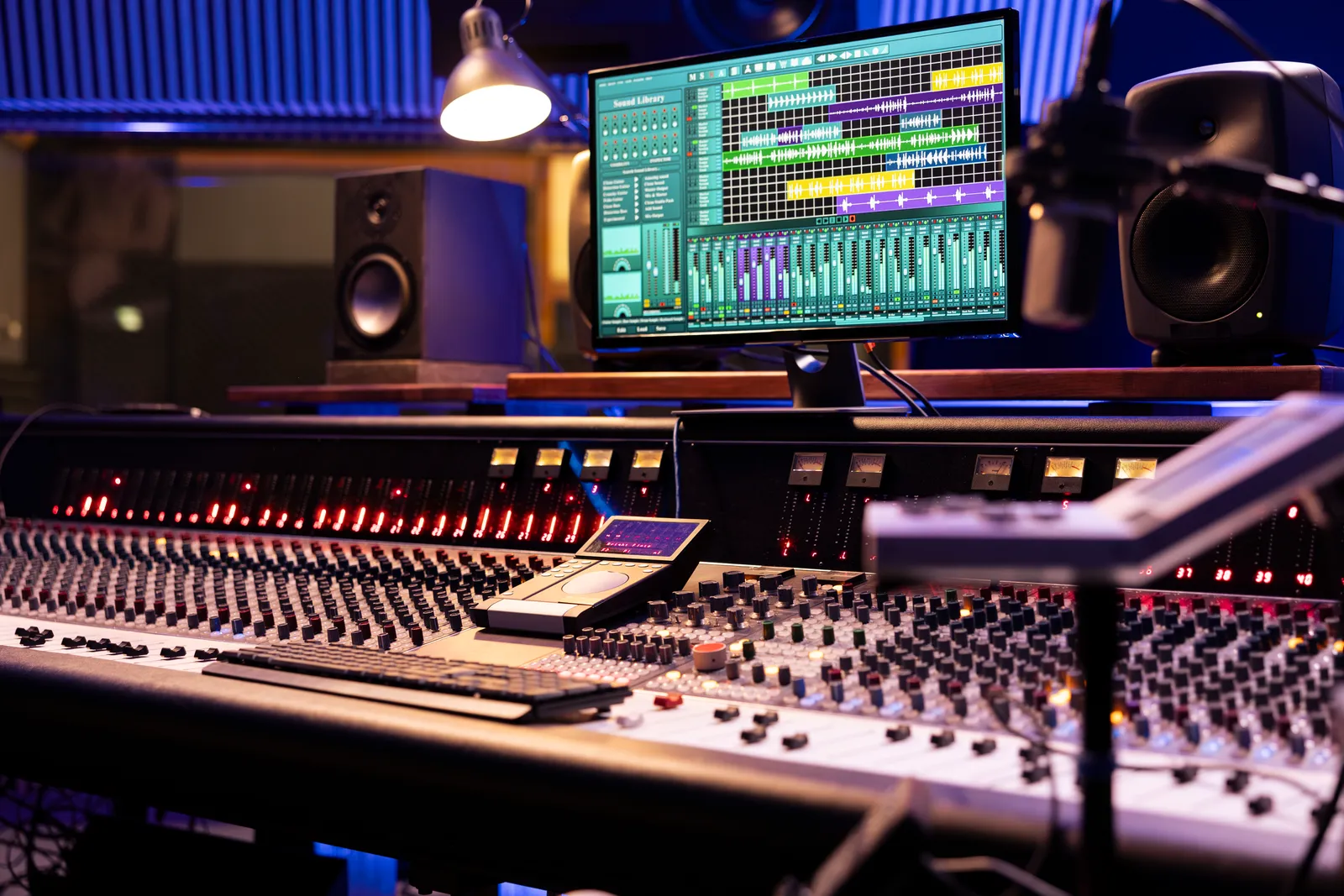
Part of what makes the Neve legacy interesting is how it connects to the physical spaces that housed these consoles. Studios built around the neve mixing desk workflow - the width of the desk, the position of the meters, the distance from the monitor speakers - created an ergonomic environment that shaped how engineers approached their sessions. The console wasn't just a tool; it was an architecture.
The Neve 1073: Inside the Module That Changed Recording
If you could distill the entire Neve experience into a single piece of hardware, the Neve 1073 would be the most accurate choice.
The 1073 is a microphone preamplifier and equalizer module that originated in Neve's 80 Series console range in the early 1970s. It combines a transformer-coupled preamp stage with a three-band equalizer and a switchable high-pass filter in a single channel strip. The preamp section uses the same Class A, transformer-coupled design principles that define the Neve sound at the console level, and the EQ section adds broad, musical curves that interact with the preamp character in a way that has become deeply embedded in recorded music.
The 1073 has been manufactured in some form for over five decades. During that time it's been used on recordings across every major genre, which is part of why its sound is familiar to listeners who've never heard the name. Sweetwater's catalog covers the current AMS Neve 1073 variants and their specifications if you want to explore what's available today.
Because the module is so well-documented and widely loved, it has attracted more hardware clones and software emulations than almost any other piece of audio gear. Companies from multiple countries have produced their own versions, and virtually every major plugin bundle for professional DAWs includes at least one 1073-style channel strip. Some of these emulations are remarkably good - accurate enough that engineers use them on professional projects when original hardware isn't available.
The 1073's EQ section deserves specific attention. It's not a parametric EQ in the modern sense - the frequency options are fixed, switchable between a set of positions rather than continuously variable. That constraint turned out to be a feature: the available positions are well-chosen for the frequencies that matter most in mixing, and the curves are broad and musical rather than surgical. You don't use a 1073 EQ to fix problems; you use it to shape sound.
Neve in the Modern Studio
AMS Neve - the company that now manufactures Neve products after a series of ownership changes over the decades - continues to produce both classic-format modules and newer designs that carry on the Neve philosophy.
The current AMS Neve product range includes several options for different studio contexts:
| Product | Type | Application |
|---|---|---|
| 1073 SPX | Preamp/EQ (rack unit) | Channel strip - the classic circuit in a modern enclosure |
| 1073 DPX | Dual preamp/EQ (rack unit) | Two channels for stereo or tracking pairs |
| 1073N | Module (500-series format) | Neve character in a modular rack format |
| Genesys Black | Modern large-format console | DAW-integrated console for professional facilities |
| Neve 8801 | Channel strip | Full-featured strip with Neve preamp and dynamics |
For producers who don't have access to a room with a genuine Neve console, standalone 1073-format preamps - original or clone - give you the same circuit character on a per-channel basis. You can run vocals, guitars, or drum overheads through a hardware 1073 before your audio interface and capture that character at the source, then mix in your DAW.
Plugin emulations are more accessible financially and represent a legitimate path to the Neve sound for most producers. The iZotope educational resources at izotope.com/en/learn.html cover how to work effectively with preamp emulation plugins in DAW mixes - including the gain staging practices that matter when you're working with saturating circuits. That context applies directly to 1073-style plugins.
Neve vs SSL: Two Philosophies for the Same Studio
The two console families that defined professional recording from the 1970s through the 1990s were Neve and Solid State Logic (SSL), and they're different in ways that matter for your mix decisions. For a detailed breakdown of the SSL side of this comparison, see our piece on Solid State Logic mixing consoles.
| Characteristic | Neve | SSL 4000 |
|---|---|---|
| Signature quality | Harmonic warmth, musical saturation | Punchy, controlled, cohesive bus |
| Circuit approach | Class A, transformer-coupled | VCA-based, transformerless options |
| Known for | Preamp character and EQ color | Bus compressor, total recall automation |
| Typical application | Tracking, mixing for warmth | High-volume commercial mixing |
| Modern access | Outboard modules, plugin emulations | Plugin emulations, hardware summing |
These aren't competing in a way that makes one objectively better. Neve tends to be described as the choice when you want the sound to have character - particularly on midrange and low-end. SSL comes up when engineers prioritize headroom, control, and the cohesion of the G-Series bus compressor.
Many of the most significant records in pop and rock history were made in rooms that had both. Different studios had different desks, and engineers had preferences for one or the other depending on the material and the stage of production. The question isn't Neve vs SSL; it's knowing what each tool does and choosing based on what your music needs. Understanding this evolution is part of why the article on vintage analog mixing consoles gets into the wider history - these weren't just tools, they were design philosophies that shaped entire genres.
Bringing the Neve Workflow into Your DAW
One of the persistent frustrations with mixing entirely in software is that it feels abstract. Large-format consoles like the Neve 8078 gave engineers something tactile: 80 faders, each controlling one channel, all physically present and adjustable without clicking through menus. That spatial awareness of a mix - knowing the drums are on the left side of the desk and the strings are on the right - has real cognitive value when you're making decisions.
Modern control surfaces are one way to rebuild that relationship with a DAW mix. Touchscreen-based controllers like TouchDaw position every channel visually in a horizontal layout similar to an actual console, which brings back some of that spatial logic without requiring a physical desk or the studio space it would occupy. For more on how the physical layout of a mix session affects decisions, see our piece on mixing workflow.
The parallel to Neve's approach isn't accidental. The reason Neve's large-format desks produced the results they did wasn't just the electronics - it was the combination of circuit character and workflow ergonomics. Engineers who use analog console emulation plugins alongside a physical control surface consistently report more confident mixing decisions because they're engaging with the material through both hands, not just a mouse cursor. That's the underlying principle Neve understood before anyone else did.
Pro Tip: When using 1073-style preamp plugins in your DAW, try pushing the input gain harder than feels instinctively right. The character of the Neve circuit comes partly from saturation that occurs at higher gain settings - running it conservatively gives you cleaner audio but bypasses much of what makes the preamp interesting. Compensate on the output to maintain your mix level, then compare at matched loudness. You'll hear the difference in the midrange.
Neve Mixing Console FAQ
What makes a Neve mixing console sound different from other consoles?
Neve consoles use transformer-coupled Class A amplification circuits that introduce controlled even-order harmonic distortion. This adds warmth and musical saturation to audio passing through the circuit. The result is described as forgiving, present, and warm - qualities that come from the transformer and circuit design rather than any deliberate coloration added in the signal chain.
What is the Neve 1073 and why is it so famous?
The Neve 1073 is a microphone preamplifier and EQ module from Neve's 80 Series console range, introduced in the early 1970s. It's been used on recordings across virtually every major genre and has been continuously manufactured, in original and updated form, for over five decades. Its fame comes from the transformer-coupled preamp circuit that produces harmonic warmth - a sound character embedded in a huge percentage of recorded music from the 1970s onward.
How much does a vintage Neve console cost?
Vintage Neve consoles from the 1970s and 1980s are rare and prices vary significantly based on condition, configuration, and completeness. Working examples appear on the used market infrequently and command prices that are out of reach for most studios. Most producers access the Neve sound through standalone 1073-style preamp modules or through plugin emulations that reproduce the circuit character in software.
What is the difference between a Neve console and an SSL console?
Neve consoles use transformer-coupled Class A circuits that add warmth and harmonic character. SSL 4000 consoles use VCA-based designs that are cleaner and more neutral, with the G-Series Bus Compressor providing the SSL's characteristic cohesion. Neve tends to be chosen for its midrange character and the way it makes individual sources sound. SSL tends to be chosen for mix control, headroom, and the glue that comes from the bus compressor.
Can I get the Neve sound without buying expensive hardware?
Plugin emulations of the Neve 1073 preamp and EQ are available from multiple developers and reproduce much of the circuit character in software. Some of these emulations are used on professional releases when original hardware isn't accessible. Standalone hardware 1073 modules or quality third-party clones provide the actual circuit rather than a model of it, which delivers a different result - but plugin emulations are a legitimate starting point.
Is Neve still making mixing consoles?
AMS Neve, the current owner of the Neve brand, continues to manufacture the classic 1073 preamp and EQ module in standalone form, the 1073 DPX, the 1073N in 500-series format, and modern large-format consoles including the Genesys Black series. The company produces both new-build versions of the original circuits and updated designs for hybrid analog/digital studio workflows.
The Neve legacy shows how a specific approach to circuit design can define the sound of an entire era of recorded music. Whether you're tracking through a hardware 1073, using a quality plugin emulation, or working with a tactile control surface to bring console ergonomics back into your DAW sessions - understanding what you're reaching for, and why it sounds the way it does, makes you a more deliberate engineer.